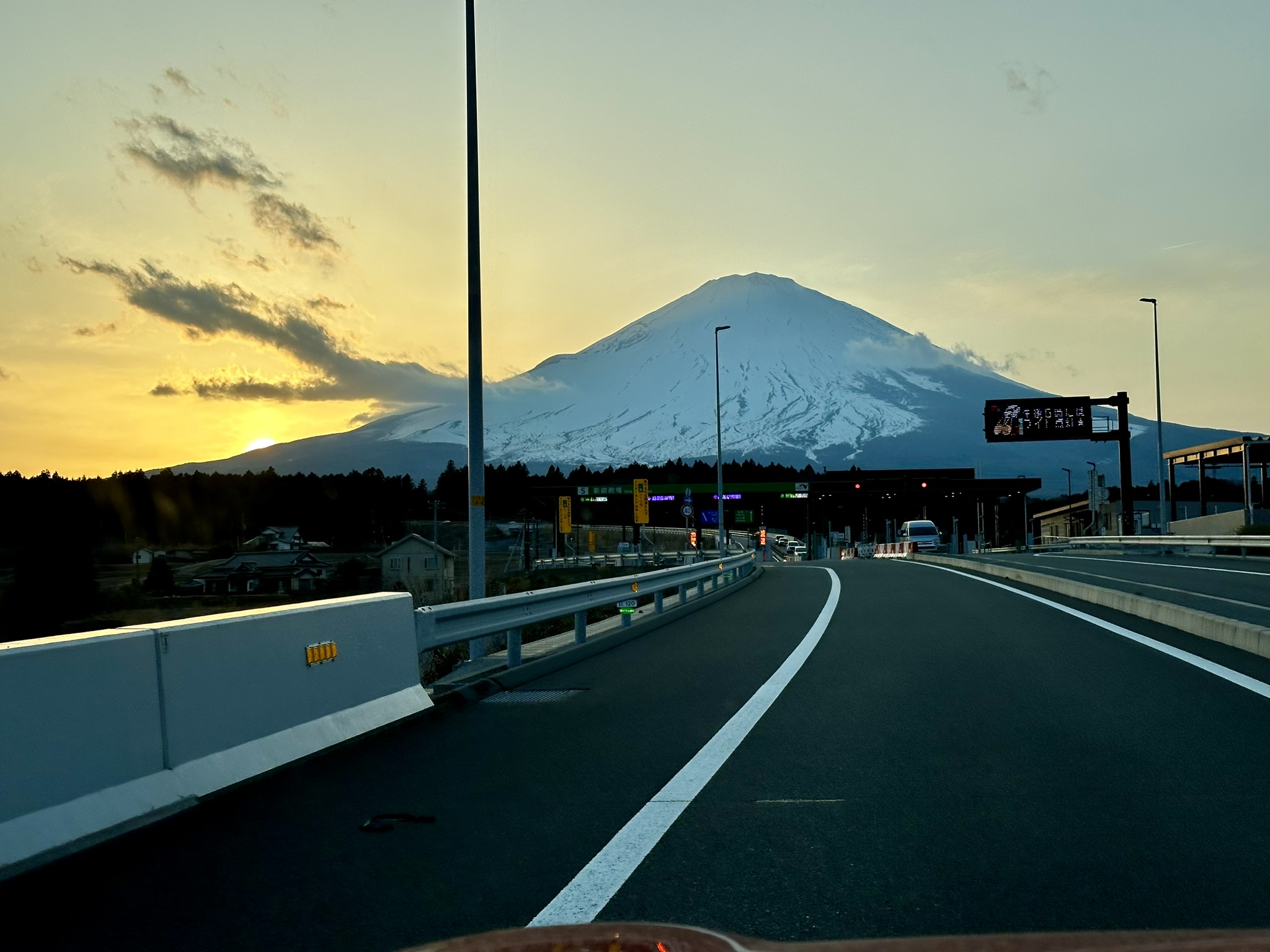
Although having a driver’s license is not absolutely necessary if living in big metropolitan areas like Tokyo, it’s always nice to have the option to drive. Maybe you’ve been wanting to go visit an onsen but it’s quite mendokusai (a hassle) to get there if going by train or bus. Perhaps you are a proud cat daddy but your cat has a tendency to SCREAM BLOODY MURDER if going to the vet. You don’t want to meiwaku (inconvenience) everyone around you on the train and being able to drive could be a much easier option (yes – very specific example but if you know, you know). Maybe you just love driving and one of your bucket list items is to go on a cross country road trip from Sapporo to Kagoshima.

Regardless of your reason, we’re here to help.
Today, we’ll be walking you through the process of switching your foreign driver’s license to a Japanese driver’s license. This process, known as “gaimen kirikae” (外免切替), can seem daunting at first, but with the right information and preparation, you’ll know what to expect before hitting the road. This guide is about converting an existing foreign license, not getting your first driver’s license in Japan.
1. Confirm Eligibility
Before starting the process, make sure you meet the following criteria:
- You have a valid foreign driver’s license. For an ordinary car license, you must be 18 or older when the Japanese license is issued (Tokyo accepts applications from 17 years and 6 months).
- You have resided in the country where your license was issued for at least three months after obtaining said license
- You have a valid status of residence in Japan
- You possess a residence card (在留カード, zairyu card) in Japan
2. Gather Required Documents
You’ll need to prepare several documents for your application:
- Original driver’s license from your home country
- An accepted Japanese translation of your driver’s license. The Japan Automobile Federation (JAF) (in Japanese) offers an online application service. Check its current fee and instructions before applying.
- Original residence card
- For foreign residents registered in Japan, a recent residence certificate (住民票, juminhyo) with the required nationality and residence-status details. Check the official checklist before requesting it at city hall.
- Original passport, including old passports if needed to show your travel history
- One passport-sized photo (3cm x 2.4cm)
- Application form (check with your licensing center about available languages)
- Evidence of having resided in the country where your license was issued for at least three months. Passport entry and exit records may help; additional evidence can be required if these do not establish your stay. Accepted documents depend on the issuing country and your licensing center. Basically, you will need to prove that you were physically in the country for at least three months from the date your license was issued. In Tokyo, bring original documents: photocopies are not accepted as substitutes.
It’s best to double check your local prefecture’s government website for any additional required documents.
For example, here (in Japanese) are the current document checklists, including English and country-specific lists, from the Tokyo Metropolitan Police.
3. Visiting the Driver’s License Center (Phase 1: Application)
The license switchover process can be separated primarily into 2 phases – Phase 1: Application and Phase 2: Exams (if required). Plan for more than one visit: in Tokyo, the practical driving check needs a separate booking and cannot be taken on the application day.
For Phase 1, prepare all the required documents mentioned in Step #2, and take them to a Driver’s License Center that handles foreign license conversion within the prefecture where you live. In Tokyo, Fuchu and Samezu handle all issuing countries; Koto only handles licenses exempt from both the knowledge and practical checks.
It’s a good idea to check online and make note of opening hours and booking rules. In Tokyo, book before making the trip through the official foreign-license conversion page (in Japanese); some applicants use a telephone booking procedure. Other prefectures have their own arrangements.
Given that License Centers can be quite a trek, it’s advisable to check with the License Center in advance before making the trip. Tokyo handles these applications on weekdays and is closed on weekends, public holidays and the year-end closure. No point making that journey for a closed counter!
If you don’t know where to go once you arrive at the License Center, usually, there is a reception at the entrance and you can ask them where to go (Ex: “Gaimen kirikae no madoguchi wa doko desu ka?”).
Follow your center’s booking and arrival instructions rather than assuming you can walk in. Note: there may still be a lot of waiting!
Once it’s your turn, the License Center staff will ask that you submit all of the required documents. They will ask you questions to ensure you are eligible to drive. It’s best to assume that communication will mainly be in Japanese. Tokyo may ask you to bring someone who can interpret if you do not speak Japanese. If you meet all of the requirements (mentioned in Step #1), they will stamp your application and you can move onto the next step!
Depending on the country or state that issued your license, you may be exempt from the knowledge and practical driving checks. This depends on your license, not your nationality. The eye exam still applies.
Below are the issuing countries and states with exemptions:
Austria, Belgium, Czech Republic, Denmark, Finland, France, Germany, Greece, Hungary, Iceland, Ireland, Italy, Luxembourg, Monaco, Norway, Poland, Portugal, Slovenia, Spain, Sweden, Switzerland, The Netherlands, The United Kingdom, Australia, New Zealand, Canada, Taiwan, South Korea, Hawaii (USA), Maryland (USA), Virginia (USA), Washington (USA ), Ohio (USA), Oregon (USA), Colorado (USA), Indiana (USA)*.
Indiana (USA)* license holders are required to take the written exam but are exempt from the driving exam.
If you are a lucky soul with a license exempt from both checks, there will be some wait time for the staff to check your paperwork, then you will have to do some admin and the eye exam only. Then, skip down to Step #5!
If this is the case, you may be able to get your license issued in one visit (results may vary).
4. Visiting the Driver’s License Center (Phase 2: Exams)
Once your application has been approved, it’s time for any checks you are not exempt from. These are the checks for foreign-license conversion, not the full process for learning to drive from scratch.
In order to prepare for this phase, we recommend taking some time to familiarize yourself with Japanese traffic laws, road signs, etc. One good resource is “Rules of the Road” published by JAF, the Japan Automobile Federation.

a. Written Exam
The knowledge check for foreign-license conversion changed on 1 October 2025: it now has 50 questions, with at least 45 correct answers needed to pass, instead of the old 10-question format. Check which languages your licensing center offers before booking. The questions cover Japanese road rules and traffic signs.
b. Eye Exam
A simple vision test will be conducted to ensure your eyesight meets the required standards. For an ordinary car license: 0.7 or above with both eyes together and 0.3 or above in each eye. If one eye is below 0.3 or cannot see, the other eye must have vision of at least 0.7 and a horizontal field of at least 150 degrees.
c. Driving Exam
Once you pass the required knowledge and eye checks, it’s showtime! In Tokyo, book the practical check separately.
You will get in a car (provided by the License Center) with a police officer and drive around a test course. The police officer will have a checklist and will be evaluating your performance from the moment the exam begins.
Adherence to rules is important in Japanese driving exams so be sure to follow the police officer’s instructions carefully. Make your safety checks clear: check your blind spots, signal properly, and stop fully at stop signs. The practical check became stricter in October 2025, so don’t rely only on older test tips.
Check out this video (Youtuber Mellow in Japan) for a personal overview of the driving exam. It predates the October 2025 changes, so use it as background rather than a current test checklist.
If you are not comfortable with driving on the left side of the road, it may be a good idea to book a session at a local driving school. Some driving schools offer drop in sessions where you can drive around a similar test course (the one I went to was around 20,000 JPY for a few hours). Also, if you are not confident in your Japanese, check with the center about bringing an interpreter and which parts of the process they may assist with.
In some cases, you may be put in a car group with other applicants. In my case, I was in a group with one other driver. Since the other driver went first, I was able to sit in the back seat and get an idea of the exam before driving myself.
My biggest advice here is to try to stay calm, make your safety checks clear, and drive defensively!
5. Getting your Japanese license
If you made it to this step, congratulations! Otsukare sama deshita.
Now that you have finished the application process and passed all of the necessary exams, you can sit back and relax while the License Center prepares your driver’s license. This may take another hour or so depending on how busy the place is.
Also, you will need to pay some fees. As checked on 10 October 2026, Tokyo lists a 2,500 JPY application fee for an ordinary car license plus a 2,350 JPY issuance fee. Translation, practice lessons and any additional charges are separate. Check the current official fees (in Japanese) before applying.
And….that’s it!
Switching your foreign driver’s license to a Japanese one can be a smooth process with the right preparation. Good luck, and happy driving!
Information last checked: 10 October 2026. This guide includes personal experience and official guidance for Tokyo. Requirements, fees and booking arrangements may differ by prefecture. Check your local licensing authority before applying. See also the official October 2025 conversion-rule changes (in Japanese).
Leave a Reply