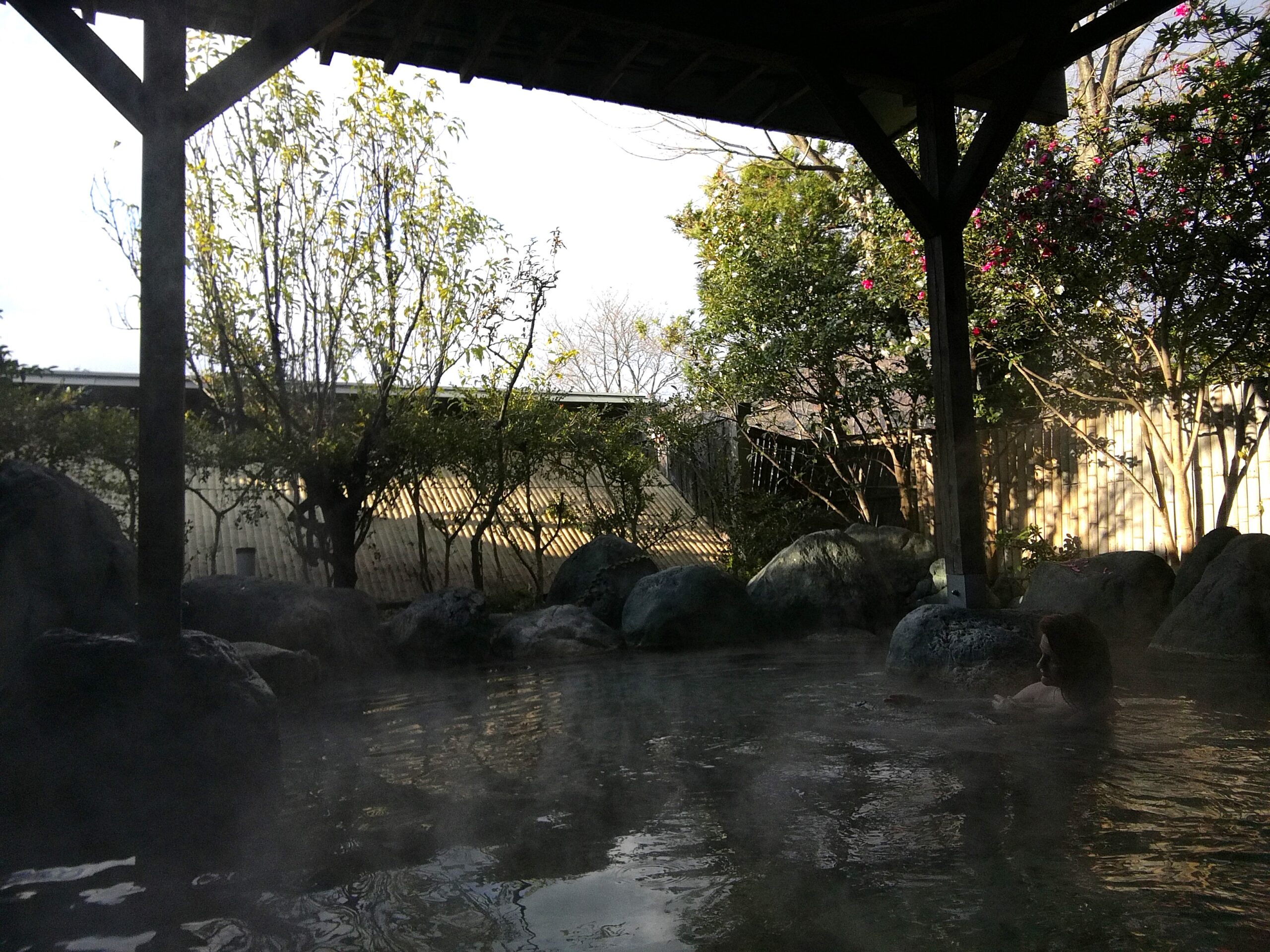
It took me too many years to realize that the key to learning the magic of the onsen experience wasn’t as easy as reading the list of bad behaviors at the entrance of the hot springs. The art of onsen (温泉), and of sento (銭湯, its little brother of the city), is passed down through generations of Japanese people. Parents teach their children at a very young age through gestures rather than proper explanations.
Japanese people have been enjoying the hot springs of the islands for so long that it can be a struggle to explain some aspects that are just innate to the culture.

You probably already know the sad reality of tattoos often being prohibited (but you might find exceptions here) and the need to wash yourself properly. Tattoo policies depend on the place, so check before you go to avoid an unwelcome surprise. Let’s explore a bit more of the untold etiquette of onsen.
- Some places rent out towels or even soap so don’t hesitate to ask the staff if you’re not sure if the hot spring will have any inside.
- Nothing should touch the water: and that means nothing, especially not your hair. If you have long hair and no hair ties, don’t panic, as hair ties are often provided in the skincare area. Worst case scenario, you can always use the twisted rubber band usually attached to the key of your locker. It also means no towels in the water, although you’re allowed to carry the small towel to dry off your face. Just remember, it must remain clear of the water.
- Young children may be allowed in the bath of a parent of the opposite sex, but check the local age limit and the facility’s rules. National guidance recommends separating boys and girls from around age 7, so do not assume a seven-year-old can still enter either bath. Seeing a little boy in the women’s bath can be surprising, but onsen is often a family experience after all.
- Slow down. There’s no phones or books or TV in the onsen (except sometimes in the sauna area, if any), so all you can do is relax, slow down and hopefully enjoy the artfully arranged decor around the onsen.
- While you’re admiring the baths, why not decide on a favorite onsen season? Mine is autumn. It’s the season of momiji, with the red maple leaves falling in the water. But the sakura season is charming too, and there’s also definitely magic in the air when the snow is falling around you while you soak in the hot water.
- Some baths can zap your butt. Careful of the electrified baths, Purported to be good for your health, they can definitely be a bit… shocking.
- Skincare time is as long as the bath itself, with stations fully equipped with hair driers, cotton swabs, skincare products, hair products, even foot creams sometimes. You can find a scale, and maybe a little wooden pad to massage your feet. It’s pretty clear you’re meant to spend as much time here as in the water,
- I’ve sometimes noticed curious looks in traditional hot springs where foreign visitors are less common. Even though it can be a bit unsettling, there are no ill feelings behind it in my opinion, just curiosity.
- Try to dry yourself off a little when you exit the bath area so you don’t trail water all the way to your locker. You can take and use your small towel with you for this purpose, but the big towel must remain in the locker.
That’s it for onsen etiquette. Did you find a golden rule that we forgot? Let us know in the comments!
Information last checked: 10 October 2026. Tattoo guidance was reviewed against JNTO’s onsen guide and children’s age guidance against the national bathing guidance (in Japanese). These practical tips are based on our experience; individual facilities and local rules may differ.
Leave a Reply