Just when you thought being unlucky for one day because of the rokuyō calendar was enough, Japan also has unlucky years!
They are called yakudoshi (厄年): certain ages traditionally considered more likely to bring difficulties, health problems or major changes. Whether people truly believe in them varies, but the concept is still well known and widely spread in Japan. Temples and shrines display yakudoshi charts, offer special ceremonies and sell plenty of protective omamori for those concerned.
I first learned about yakudoshi from a Japanese friend during a tough period of my life.
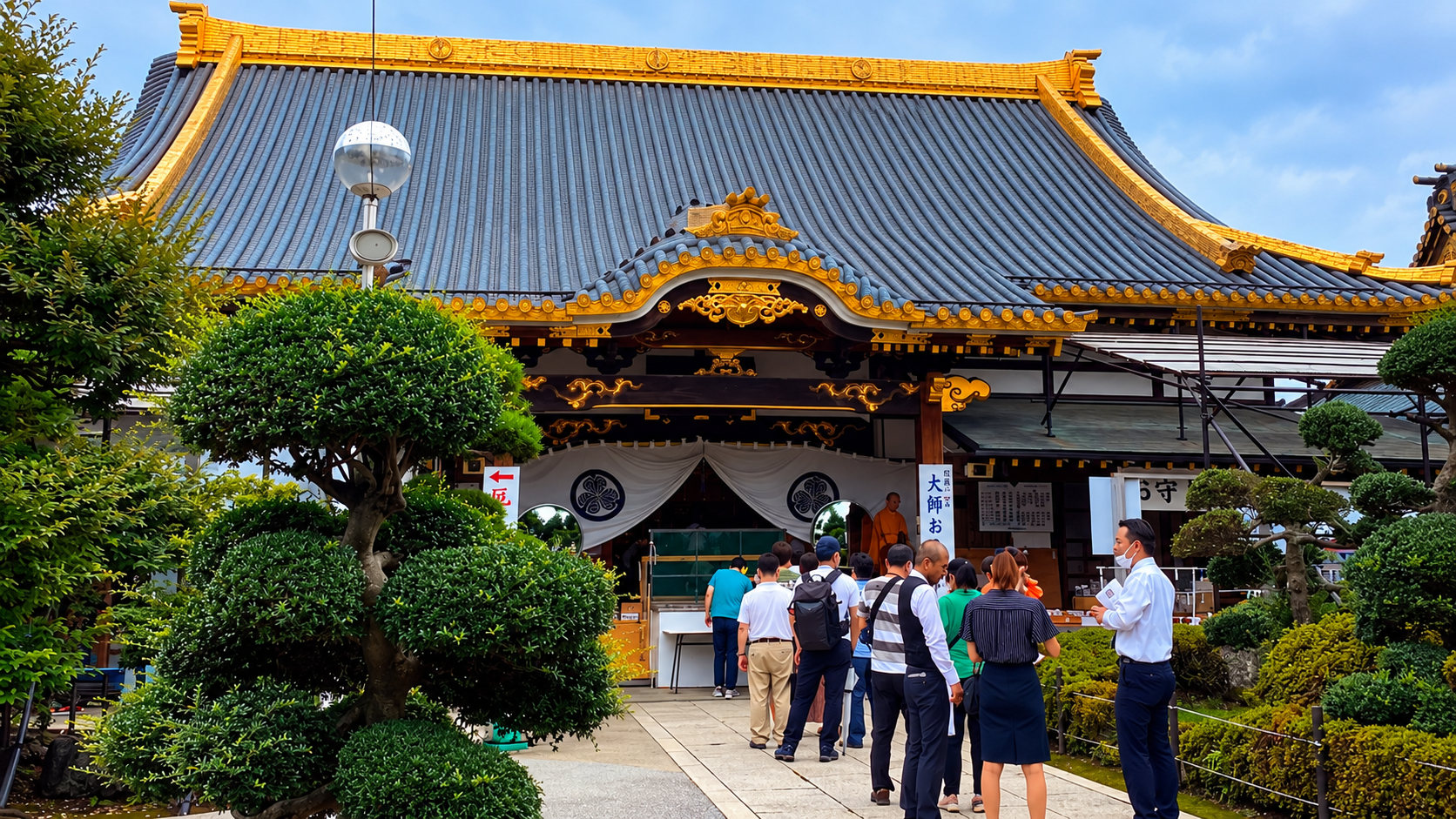
She kindly took me to Sano Yakuyoke Daishi, a temple famous for warding off bad luck, and arranged for a ceremony to be performed for me.
Until then, I had no idea that I might be having a bad year for officially scheduled reasons…!
What is yakudoshi?
The word is made of yaku (厄), meaning misfortune or calamity, and doshi/toshi (年), meaning year.
Yakudoshi are traditionally not seen as a prediction that something terrible will definitely happen (thankfully !), but more as as turning points in life, when changes in health, family life or social responsibilities may make people more vulnerable to difficulties.
The exact origins are unclear : it seems yakudoshi is often linked to Onmyōdō (陰陽道), a traditional system influenced by Chinese ideas about divination, calendars and the balance of natural forces. References to unlucky ages already appear in Japanese literature from the Heian period, including The Tale of Genji.
Maeyaku, honyaku and goyaku
An unlucky year does not come alone (yay).
Indeed, each yakudoshi period lasts for three years:
- 前厄 (maeyaku): the year before the main unlucky year
- 本厄 (honyaku): the main unlucky year
- 後厄 (goyaku): the year after it
While one may think honyaku has to be the worst, my (and friends!) experience tends to not always point to that one precisely. But of course, it’s up to each of us to read into it (or not).
On top of that, among the honyaku years, one age is considered the taiyaku (大厄), or “great calamity”, for each sex: 42 for men and 33 for women.
This does not mean that your entire three-year period has to be spent waiting for disaster. Most people will only make sure to receive a blessing, carry a specific omamori or pay a little more attention to their health and decisions over those years.
When are the unlucky years?
Yakudoshi ages are traditionally calculated using kazoedoshi (数え年), the old Japanese system of counting age.
Under this system, you are already one year old when you are born, and everyone gains another year on January 1st. That means that your yakudoshi age may therefore be one or two years ahead of the age you would normally give.
These are the most commonly recognized ages:
| Maeyaku | Honyaku | Goyaku | |
|---|---|---|---|
| Men | 24 | 25 | 26 |
| Men | 41 | 42, taiyaku | 43 |
| Men | 60 | 61 | 62 |
| Women | 18 | 19 | 20 |
| Women | 32 | 33, taiyaku | 34 |
| Women | 36 | 37 | 38 |
| Women | 60 | 61 | 62 |
Using the standard list, men go through three main yakudoshi periods during their lives, while women go through four. Yes, this means that women spend a surprisingly large part of their thirties either approaching, experiencing or recovering from an unlucky year…
If you want to check whether you are currently in maeyaku, honyaku or goyaku, the easiest option is to look for a chart for your birth year at a temple or shrine, as there will be signs signaling the current ages “affected”.
Below is the sign I saw in Sano when I went, so, yes, you may need to know your birth year in Japanese eras, as well as be able to read (or use your phone to) some chinese characters.

What do people do during yakudoshi?
Some people do nothing at all. Others visit a shrine or temple for a special prayer intended to protect them from misfortune.
At a Shinto shrine, the ceremony is commonly called yakubarai (厄祓い), meaning the purification of misfortune. At a Buddhist temple, you will more often see yakuyoke (厄除け), meaning protection against misfortune. In everyday conversation, however, the terms are sometimes used quite loosely.
You normally register at the shrine or temple, provide your name and birth date, choose the type of prayer and pay a ceremony fee. Depending on the place, the ceremony may involve purification prayers or a Buddhist goma (護摩) fire ritual.
You can also buy a special yakuyoke omamori (厄除けお守り). These protective charms are extremely common, and some temples offer several versions based on your age, zodiac sign or the type of protection you want. At this point, I have collected so many of them… But that’s a topic for another time.
You may also receive an ofuda (お札), a larger protective talisman intended to be kept at home, like mine below:

There is no universal rule saying that you must complete the ceremony before a particular date, but many people will try to do it as soon as the year starts, alongside their new year prayers.
Sano Yakuyoke Daishi
Located in Sano, Tochigi Prefecture, Sano Yakuyoke Daishi (佐野厄除大師) is one of the best-known temples in the Kantō region for yakuyoke ceremonies.
Its actual name is Sōshūji (惣宗寺), but its association with protection from misfortune is so strong that most people know it simply as Sano Yakuyoke Daishi. The temple performs yakuyoke and directional-protection prayers throughout the year and offers a rather impressive selection of related omamori and ofuda.
When my friend told me about yakudoshi and brought me to Sano so that a ceremony could be performed for me, it was my first time hearing about it, but I am so thankful for that trip!

Did it magically fix everything? Probably not. But being cared for in such a thoughtful way, visiting the temple and marking the moment did bring some comfort. I can still remember the monk pronuncing my name alongside the others during the prayers and it did make me feel like somehow I was taken care of.
Should you worry about yakudoshi?
Probably not. But it’s up to you!
Like rokuyō, yakudoshi is part superstition, part tradition and part practical reminder that some periods of life come with more changes than others. Not every Japanese person follows it, and even those who do may not treat it as a firm prediction.
Still, I think it is worth knowing about. You will see yakudoshi charts during temple and shrine visits, particularly around New Year, and someone may suddenly tell you that you are in your honyaku when you had no idea you were supposed to be unlucky.
If that happens, you can receive a yakuyoke ceremony, pick up an omamori, or simply take it as a reminder to look after yourself a little more carefully.
And perhaps avoid making any unnecessarily chaotic life decisions. Just in case.
Leave a Reply